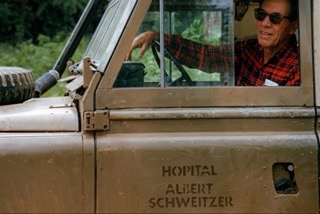
Today, Hôpital Albert Schweitzer Haiti celebrates 70 years of serving the people of the Artibonite Valley. What began as a small rural hospital has grown into an integrated health system that provides hospital and community-based services to more than 500,000 people each year. While much has changed over the past seven decades, the organization’s history reflects a consistent commitment to meeting the needs of the communities it serves.

When William Larimer Mellon Jr. and Gwen Grant Mellon established Hôpital Albert Schweitzer Haiti, they set out to address a pressing need: access to quality healthcare in the Artibonite Valley. They could not have predicted exactly what the organization would become over the next seventy years. They knew families often traveled long distances to seek treatment, and they believed healthcare could improve lives and strengthen communities. What they could not have known was that every solution would reveal a new challenge to solve.
A hospital could treat illnesses and injuries, but it could not prevent every illness from occurring. Patients recovered and returned home to communities facing many of the same obstacles that had affected their health in the first place. Mothers received care during childbirth but often lacked access to support earlier in pregnancy. Children treated for malnutrition returned to families facing food insecurity. Patients recovered from waterborne illnesses and returned to communities without reliable access to clean water.
Over time, these experiences taught important lessons. Healthcare did not begin at the hospital door, and improving health required more than treating disease. The organization gradually expanded beyond the hospital campus and into the communities it served. Community dispensaries brought healthcare closer to home. Health workers traveled into remote areas to provide education, preventive services, and support. Maternal and child health programs expanded access to care for women and children. Nutrition initiatives, sanitation projects, and clean water programs addressed some of the conditions that contributed to poor health in the first place.
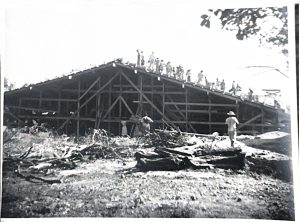
Underlying each of these efforts was a simple question: What do people need now? The answer changed over time. In some communities, families needed access to basic healthcare closer to home. In others, the need was clean water, sanitation, nutrition support, or health education. As HAS listened, learned, and adapted, the organization grew from a single hospital into a broader health system designed to support families throughout the Artibonite Valley.
That spirit of adaptation appears throughout the history of HAS. By the organization’s 50th anniversary, leaders reflected on what decades of experience had taught them. They recognized that economic development, literacy, reforestation, clean water, and sanitation were as important to community health as doctors, nurses, and pharmacists. It was a lesson learned not from theory, but from fifty years of working alongside communities and responding to their needs.
The healthcare challenges facing Haiti have changed dramatically over the years. Disease outbreaks, natural disasters, political instability, economic hardship, fuel shortages, and insecurity have all tested the resilience of communities throughout the country. Each challenge has required new approaches and new solutions, yet the same mindset has continued to guide HAS.

When COVID-19 reached Haiti, HAS rapidly established treatment protocols, created a COVID Treatment Center, expanded community education efforts, and later administered more than 20,000 vaccine doses. During the 2021 earthquake response, teams supported emergency care efforts, transported medicines and supplies, and worked alongside partners to reach affected communities. As fuel shortages disrupted daily life across Haiti, HAS relied on investments in infrastructure and solar power to maintain essential services.
Yet even as circumstances have changed, the underlying approach has remained remarkably consistent. HAS continues to identify needs, work alongside communities, and build solutions that improve health and quality of life.
Today, that work reaches more than 500,000 people each year through a network of hospital services, community health centers, mobile clinics, outreach programs, and preventive health initiatives. More than 700 Haitian staff members carry this mission forward, providing care that extends far beyond the walls of the hospital. In 2026 alone, HAS has already provided more than 32,000 outpatient consultations, admitted nearly 5,000 patients, and conducted more than 16,000 community health worker home visits.
Looking back across seventy years, it is tempting to focus on milestones. The opening of the hospital. The expansion of community programs. The development of new services. The countless statistics that reflect lives touched and communities served. Those achievements matter, but they tell only part of the story.

The story of HAS is ultimately one of continuous growth driven by a willingness to listen. Every generation of staff has inherited the work of those who came before them while responding to the realities of their own time. Every challenge has revealed new opportunities to serve. Every solution has opened the door to new possibilities.
Seventy years ago, the idea was to build a hospital. What followed was something much larger: a health system, a community partner, and a trusted source of care for generations of families.
Perhaps that is the lesson of seventy years at HAS. Meaningful change rarely happens at once. It grows over time as people continue to build ideas, adapt to new challenges, and respond to the needs of their communities.
As HAS celebrates its 70th anniversary today, the work continues. New challenges will emerge. New needs will arise. New solutions will take shape. The mission, however, remains the same as it was in 1956: working alongside the people of the Artibonite Valley as they strive to improve their health and quality of life.