Dear HAS Community,
At Hôpital Albert Schweitzer Haiti (HAS), we believe patients should receive lifesaving care as close to home as possible. Establishing our thoracic surgery program marks an important expansion of specialized treatment for the more than 500,000 people HAS serves each year. The program does more than add another surgical service. It reflects our continued commitment to meeting the changing healthcare needs of our communities.
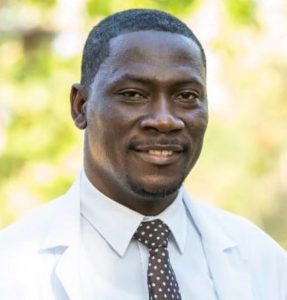
Before HAS offered thoracic surgery, our teams regularly treated people with gunshot and stab wounds, severe chest trauma, and complex infections. Although clinicians could stabilize them, patients who needed specialized thoracic procedures generally had to be referred elsewhere. Seeing these cases repeatedly motivated me to pursue specialized training in thoracic surgery. After completing a two-year fellowship in Paris, I returned to HAS late last year to bring this care to patients in central Haiti.
A Lifesaving First Operation
The value of this capacity became clear with the very first thoracic surgery at HAS. A young woman arrived at the hospital in shock with a dangerous buildup of blood around her heart, a condition known as cardiac tamponade. An emergency echocardiogram confirmed that the pressure was preventing her heart from pumping properly. Our team took her immediately to the operating room, where the procedure was successful and saved her life.
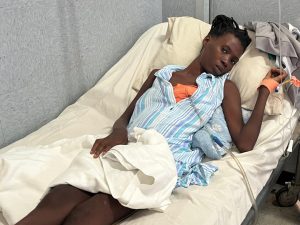
For everyone involved, the first operation was an extraordinary moment. It demonstrated what can happen when advanced medical training is made accessible locally, but it was only the beginning.
Since that initial milestone, our thoracic team has treated 16 patients, eight of whom required surgery. Their conditions have included severe internal bleeding, collapsed lungs, and complex infections that can worsen within minutes. With this service available at HAS, clinicians can intervene sooner, and several individuals are alive today as a result.
Overcoming Barriers to Care
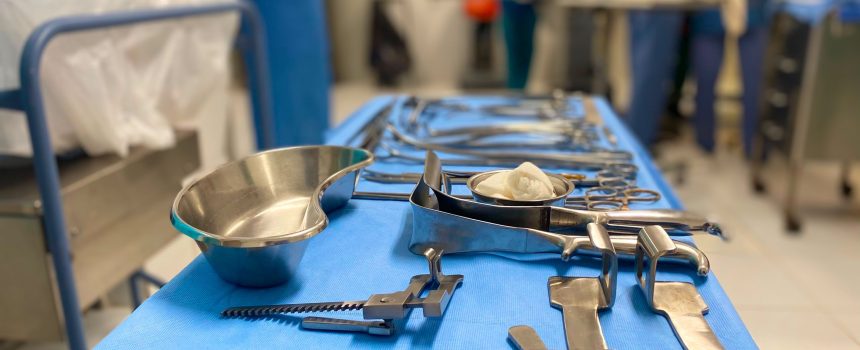
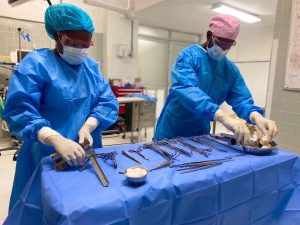
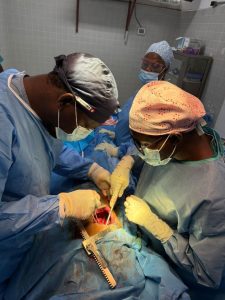
This program was built on an already active surgical service at HAS. When surgery is necessary, the thoracic team can perform a thoracotomy. This procedure provides access to the organs inside the chest, allowing surgeons to control bleeding, treat complex infections, and repair serious injuries.
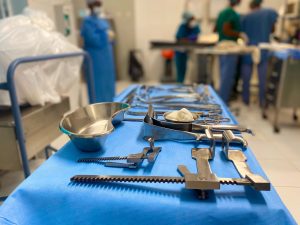
Access to this level of specialized treatment remains a significant challenge across central Haiti. Advanced care is often limited to hospitals in Port-au-Prince. Medical costs, transportation expenses, and distance can make referrals impossible for many families. Ongoing regional insecurity has also made travel increasingly dangerous. Any delay can lead to severe complications or death.
Offering thoracic surgery at HAS brings timely care closer to home. This capability changes the decisions clinicians can make. Instead of stabilizing someone for transfer, they can move from diagnosis to definitive treatment without losing time arranging transportation under unsafe conditions. Remaining nearby also reduces the uncertainty and expense families face.
A Stronger Hospital Overall
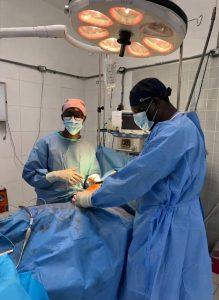
Every thoracic crisis demands close coordination across HAS. Emergency physicians and imaging staff identify the problem. Anesthesia and surgical teams prepare the operating room, while nurses, laboratory staff, and the blood bank support the patient throughout the procedure and recovery.
This collaboration is essential, and its benefits reach much farther than a single program. As colleagues gain experience working together, they refine protocols and improve HAS’s overall readiness for disasters or mass casualty events. Lessons from this work also strengthen trauma pathways for other emergencies across the hospital. The result is a stronger, more resilient response for anyone who arrives at our doors with a life-threatening injury.
For more than 70 years, Hôpital Albert Schweitzer has responded to the changing healthcare needs of the communities it serves. The thoracic surgery program carries that commitment forward. It also reinforces HAS’s role as an essential referral hospital for communities throughout the Artibonite Valley. No one should lose the opportunity to survive because lifesaving treatment is too far away or financially out of reach.
Looking ahead, I hope to expand the range of thoracic care available at HAS by adding equipment for minimally invasive surgery, bronchoscopy, and CT imaging. I also want to train other HAS general surgeons in thoracic surgery. Together, these investments will allow us to treat more patients, expand availability, and help sustain the program for years to come.
I am deeply proud of the physicians, nurses, technicians, and support staff whose dedication made this achievement possible. Establishing thoracic surgery at HAS reflects what our hospital has always sought to do: respond to the needs of our communities with compassionate, high-quality care. I look forward to seeing the difference this work will continue to make in the years ahead.
Sincerely,
Dr. Faustin Charles
Chief Medical Officer